
| Status: | Active, open to new members |
| Leader: | |
| When: | Monthly on Friday mornings 4th Friday of month |
| Venue: | Various |
| Cost: | None apart from a possible bird reserve entrance fee |
We visit local birdwatching sites in Worcestershire, Warwickshire and Gloucestershire, and also places of birdwatching interest further afield. New members are welcome. Car sharing can be arranged.
The group met locally at Avon Meadows, Pershore last year, as well as travelling to the Gloucester area, the Forest of Dean and to the Wildfowl and Wetlands Trust reserve of Slimbridge. Birds migrate to either spend the winter here, ducks and geese for example, or to spend the summer months with us as is the case with many insect feeding birds like warblers and flycatchers. We time our visits accordingly.
In winter we went to both Slimbridge and the lakes of the Forest of Dean for overwintering wildfowl. In spring we enjoyed the song of Nightingales at Highnam Woods near Gloucester and Sedge and Reed Warblers at Pershore. Our June meeting was for a special bird, the Nightjar. These summer visitors breed on heathland and appear at dusk to feed on flying insects such as moths, so in June it was an evening meeting to the Forest of Dean. We were lucky to both see them and hearing their strange "churring" song.
Contact Alan Chambers for more information.
Bird Watching Out and About
-
August 2025 Slimbridge
There was a bit of a buzz around Slimbridge when we arrived as there had been a Black-winged Kite seen in the area in the previous two days. This sighting is what twitchers refer to as a Mega – it was only the second one seen in Britain. Passing through the reserve we met the wardens and some volunteer who had been looking for it, but to no avail. However, just in case, we started our birding by heading out towards the Middle Point on the Summer Walkway. I don’t believe any of our previous outings had taken us there, but it was a very pleasant walk in the sun and a chance to get to near the estuary mudbanks as the tide receded. We stopped off to look at the Rushy Pen to see good views of waders, before walking out beside the estuary wall. The early sun went behind the clouds reducing the heat haze, so we could get good, if distant views of flocks of Ringed Plover, Curlew and Dunlin with a lone unexpected Knot. A Spotted Redshank was in a pool just by the Estuary Tower and Cranes could be seen out on the Dumbles.
We moved on to the Zeiss hide for views across Top New Piece. Three Spoonbills were asleep on an island but frustratingly, seldom raised their heads so we could see their extraordinary bills. It was from here that we saw the Tundra Bean Goose (of unknown origin) that was alone but near Greylags for a good comparison. South lake provided views of a flock of Black-tailed Godwits and a lone Avocet as well as a few diving ducks, before we set off for home to miss the bank holiday traffic.

Green sandpiper - Geoff 
Lapwing - Geoff 
Reed warbler - Geoff 
Two Greylags and a Tundra Bean Goose -
June 2025 Forest of Dean
It was a very breezy and cloudy evening in the Forest of Dean and despite the forecast the wind didn’t drop during the evening. So, we were a little anxious that this may not be good weather for nightjar spotting. We arrived at the site between Haywood and Edgehills Plantations and just a few birds could be heard above the noise of the rustling trees; a tree pipit, song thrush, blackbird and dunnock. However, at 21.43 we heard our first nightjars churring, at least two birds on separate sides of the path. It wasn’t long before we had a tantalisingly brief glimpse of one fly over us. We picked out a different call which turned out to be the nightjar’s flight call, but if the bird didn’t get above the treeline the light was too poor to see it. Patience was rewarded with many later flyovers, with birds sometimes hovering bedside us. At 22.30 it was too dark to continue so we made our way back to the cars.
Some of the party had possible distant sightings of woodcock, but the trip was all about nightjars and they didn’t disappoint. So, no bird list this time and I doubt anybody managed photos in the light of dusk.
-
September 2024 - Grimley
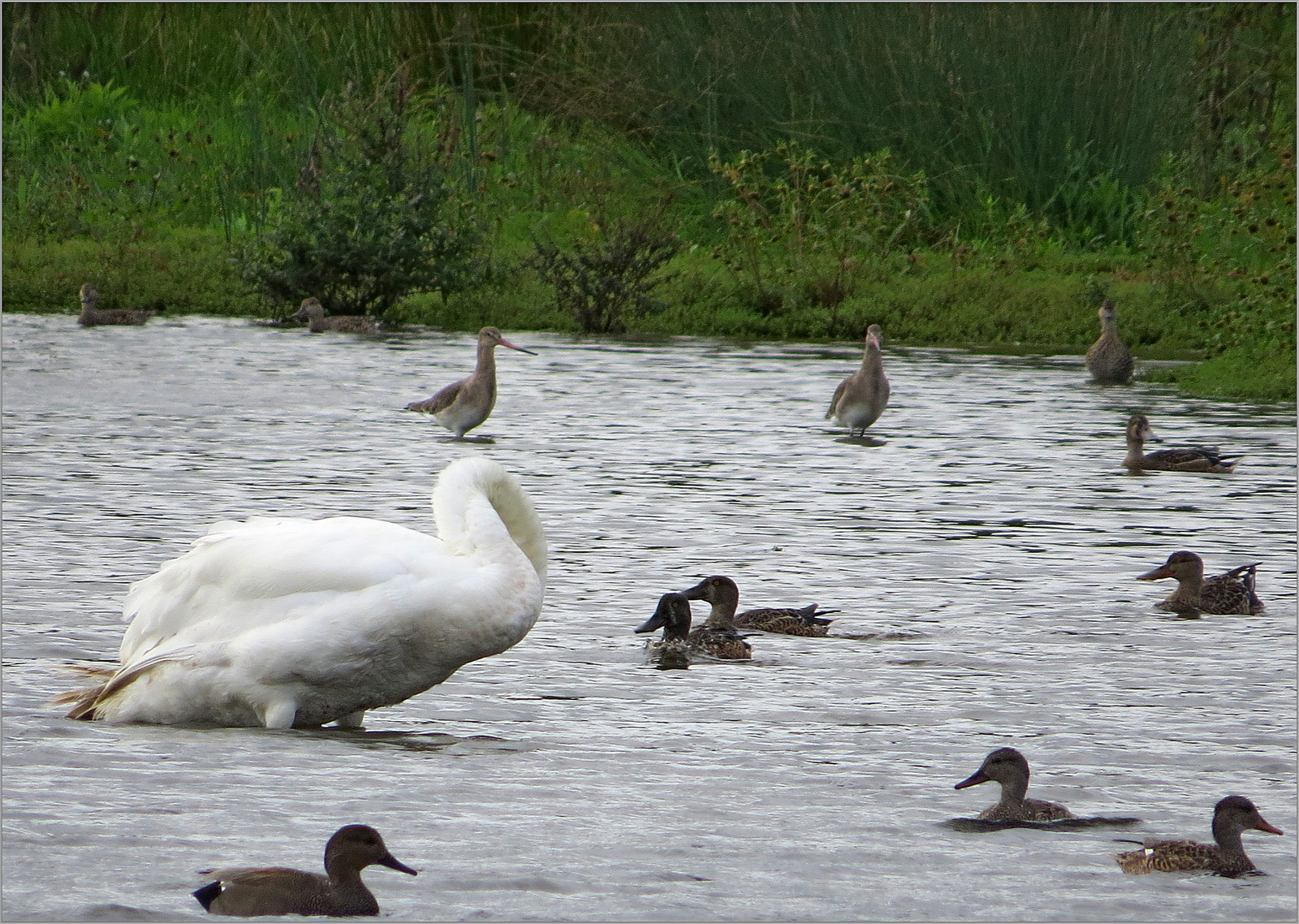
It was a cold and windy day at Camp Lane Pits, Grimley. Amazingly the air was full of migrating swallows swooping over the water, with the occasional house martin amongst them. We wondered what they were finding to eat in those cool conditions. There was a flock of lapwing that rose up and flew around before settling again. There was also a very brief dunlin, plus snipe and two rather elusive black-tailed godwits. There were of course ducks on the water which included good numbers of shoveler and wigeon, as well as little and great-crested grebes and a great white egret.

Great White Egret
Richard Hunt
Lapwing and Shoveler
Kevin Williams
Black-tailed Godwits behind Mute Swan
Richard Hunt -
August 2024 - Slimbridge
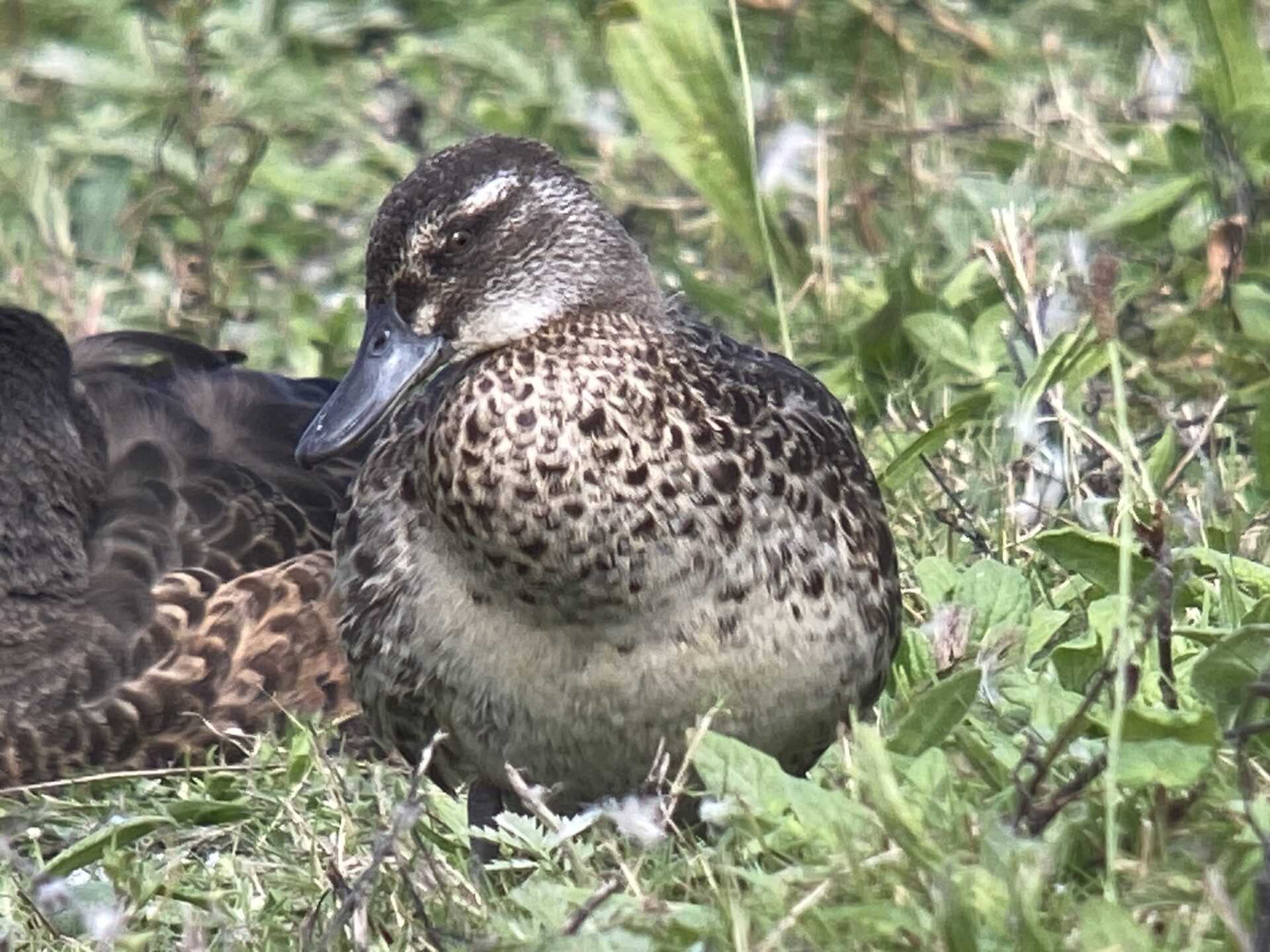
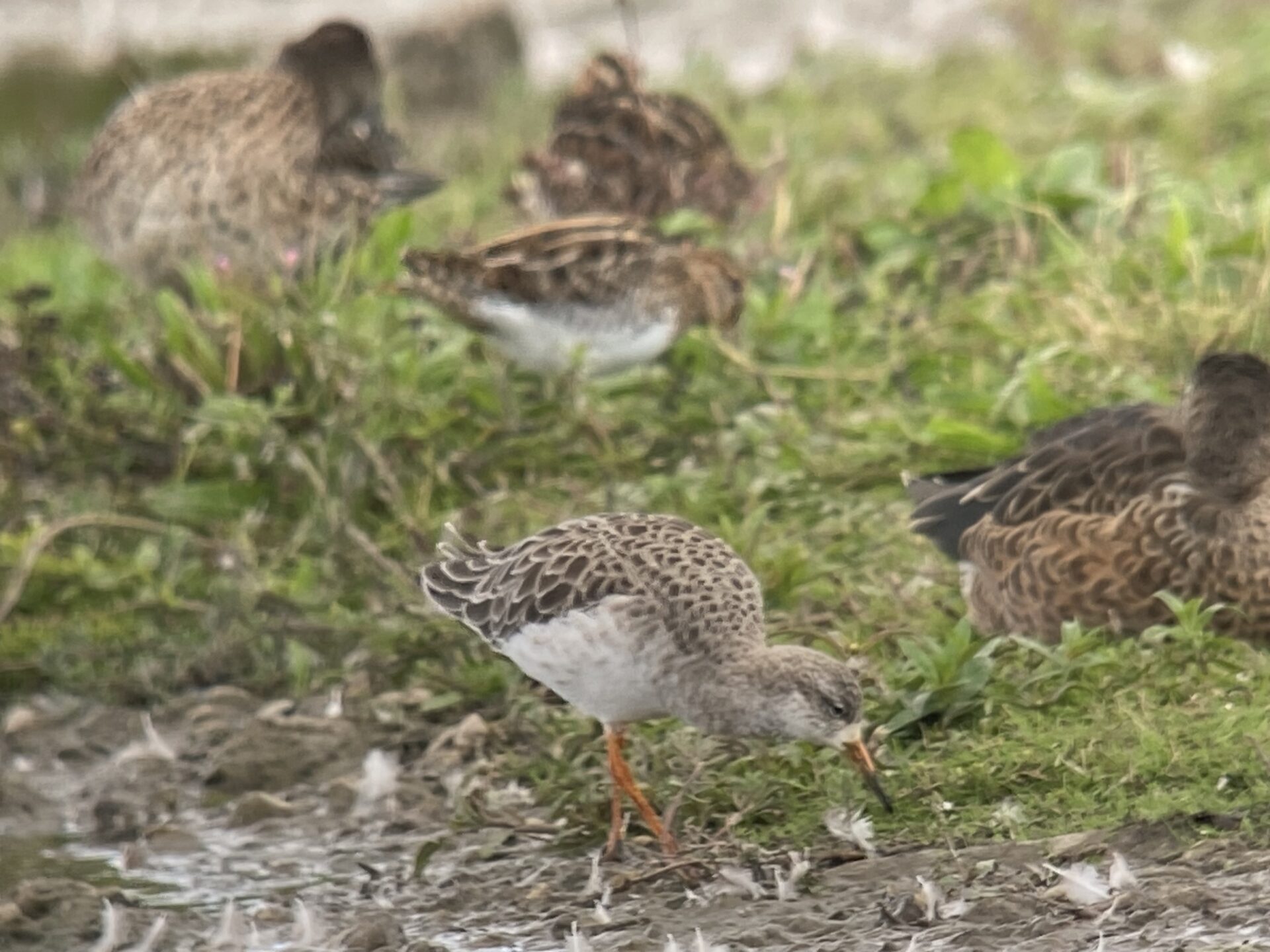
Slimbridge, as always, provided a good day's birding, but also a challenge or two. The first was to find an eclipse plumage garganey that had been see on the Rushy, and it was only with the help of a WWT staff member that we succeeded, for the duck in question was asleep with its head tucked in! We were also trying to find greenshank out on the estuary, but unfortunately we failed in that challenge. There were however, plenty of other wading birds, particularly two spotted redshanks, ruffs and a number of green sandpipers scattered around the pools. Other highlights included two spoonbills, a water rail and a yellow-legged gull.
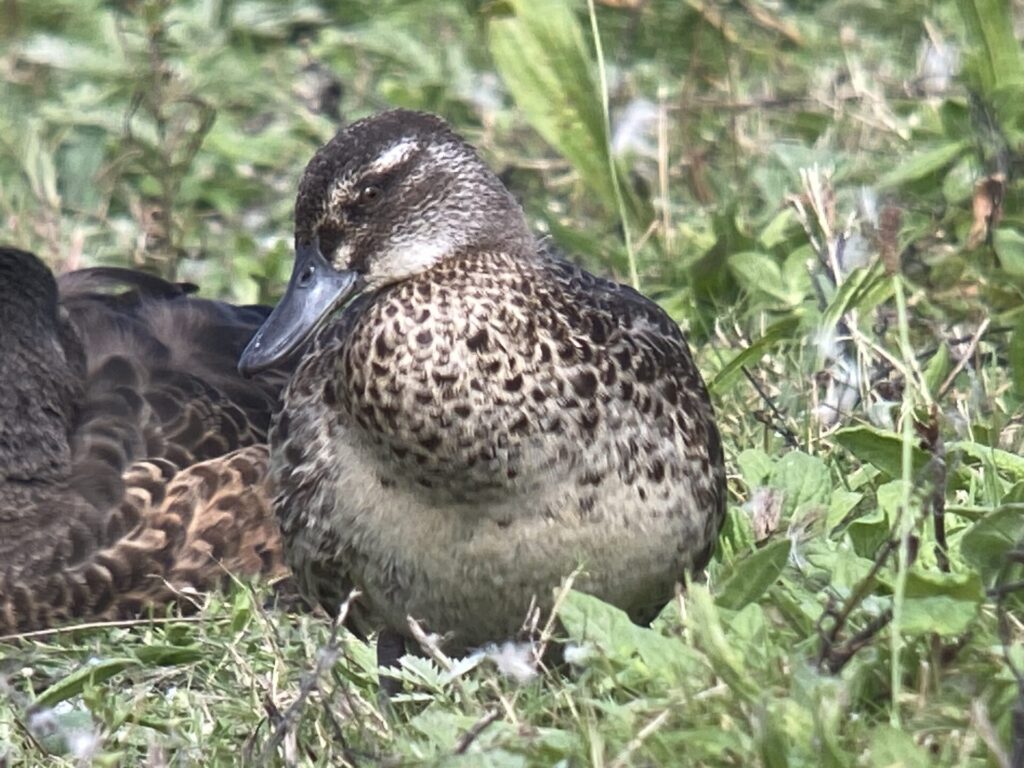
Garganey
Alan Chambers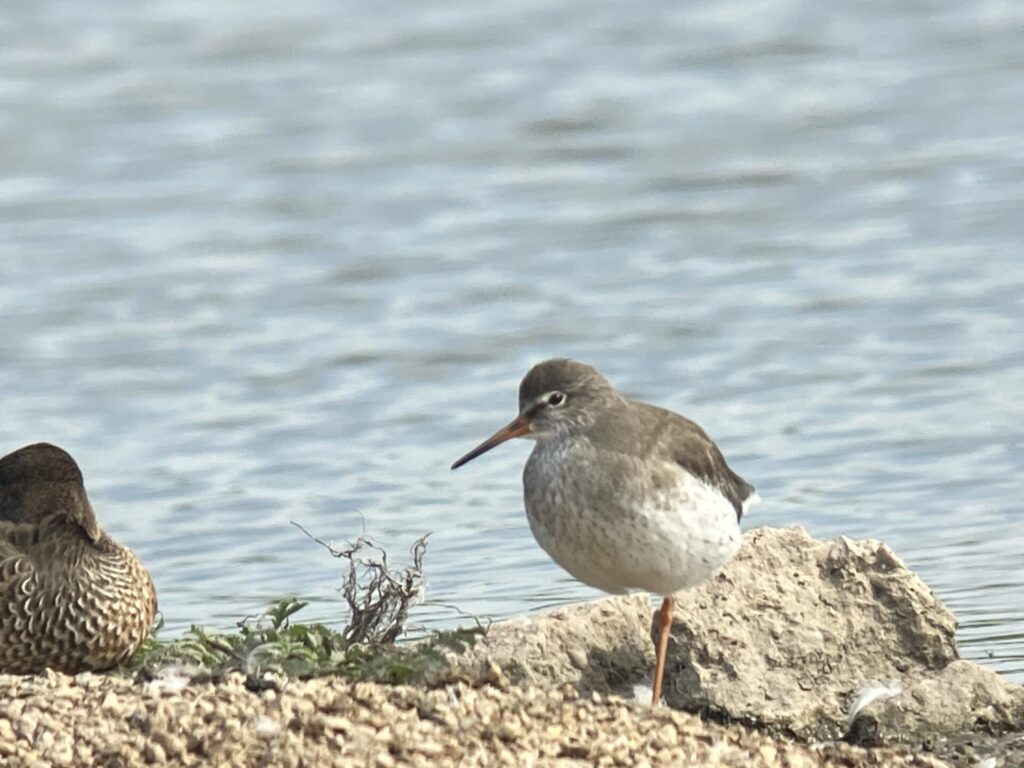
Redshank
Alan Chambers
Ruff with Snipe in background
Alan Chambers